Poached Pears (Peras Bêbadas)
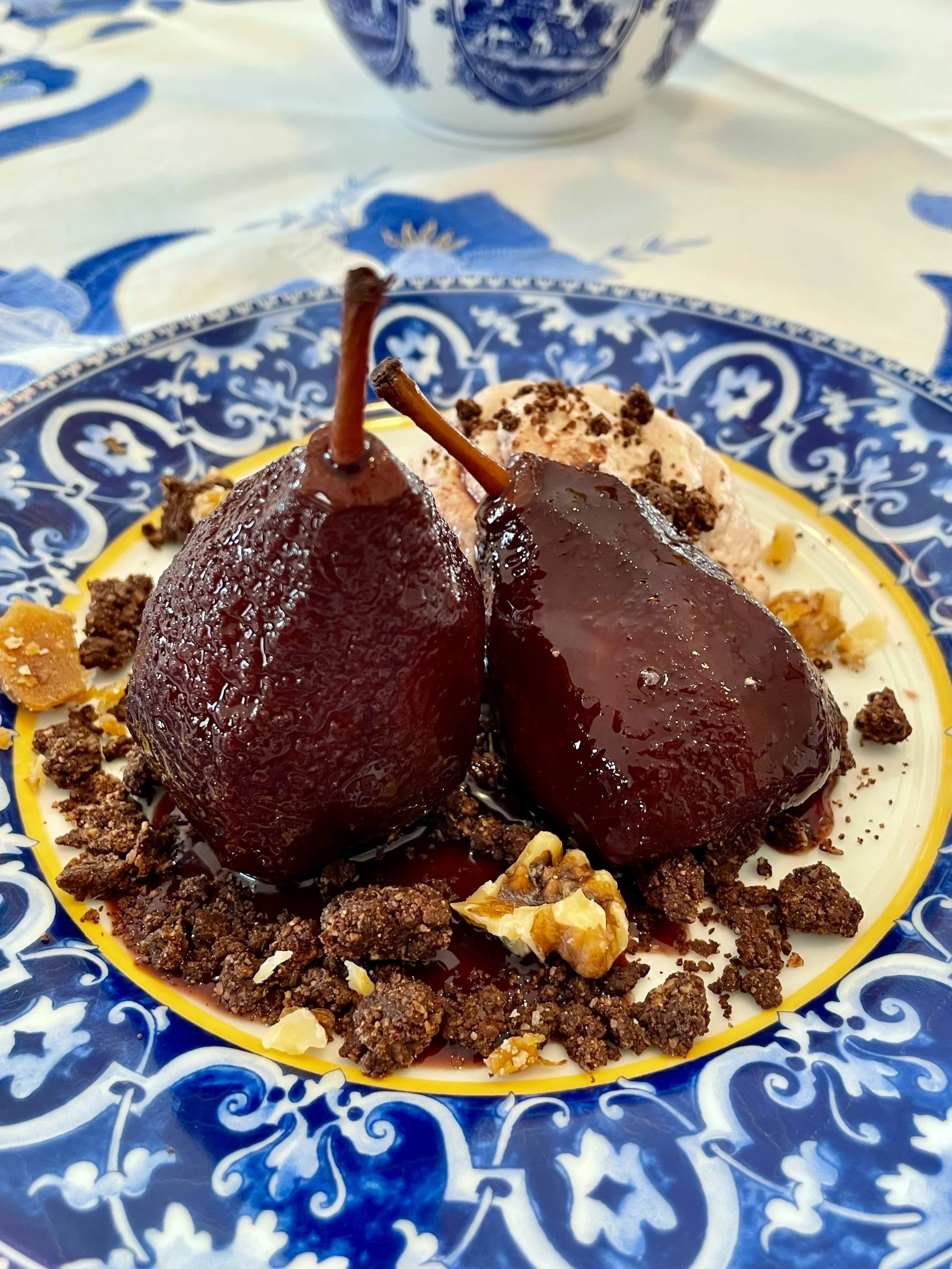
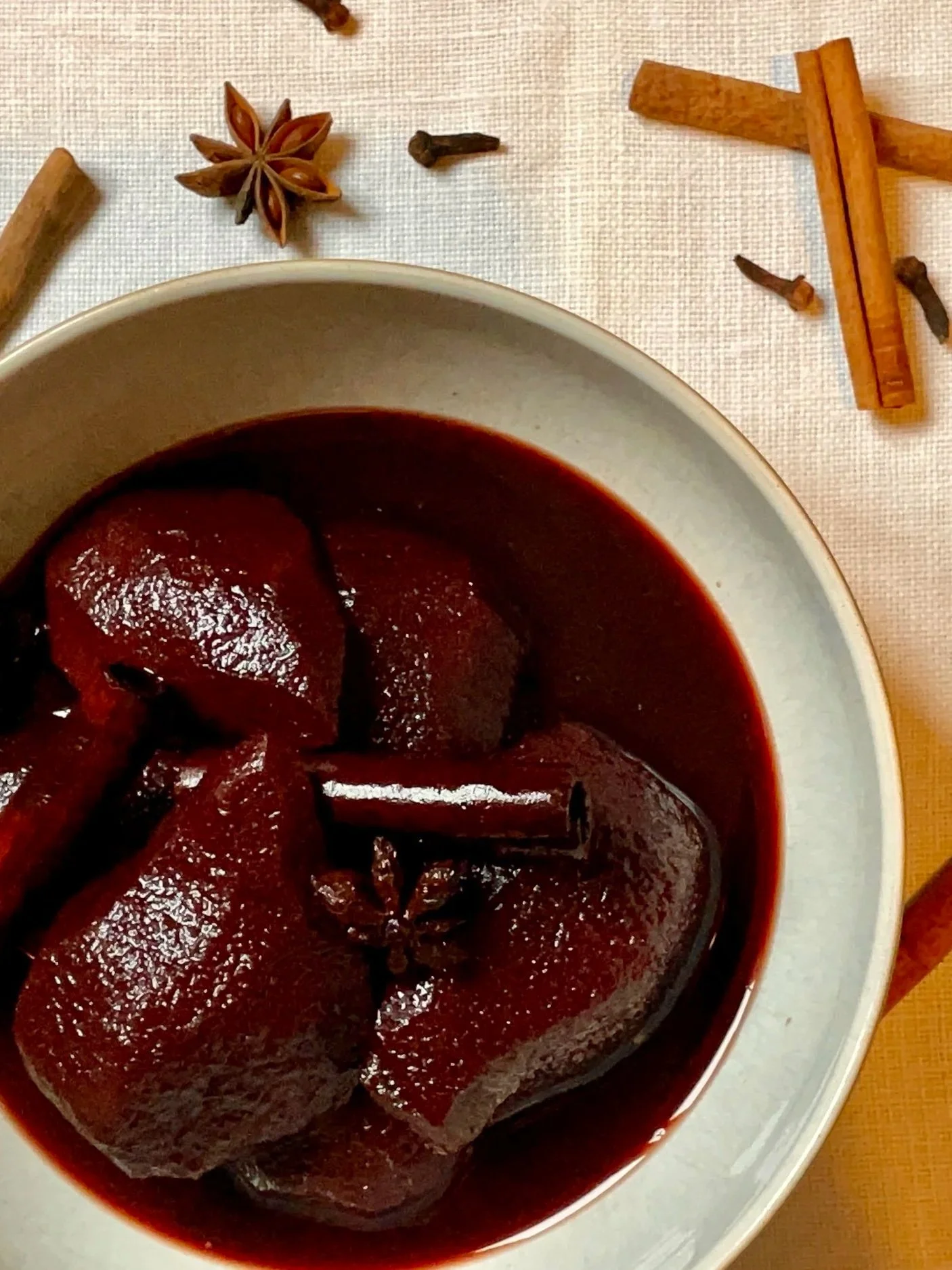
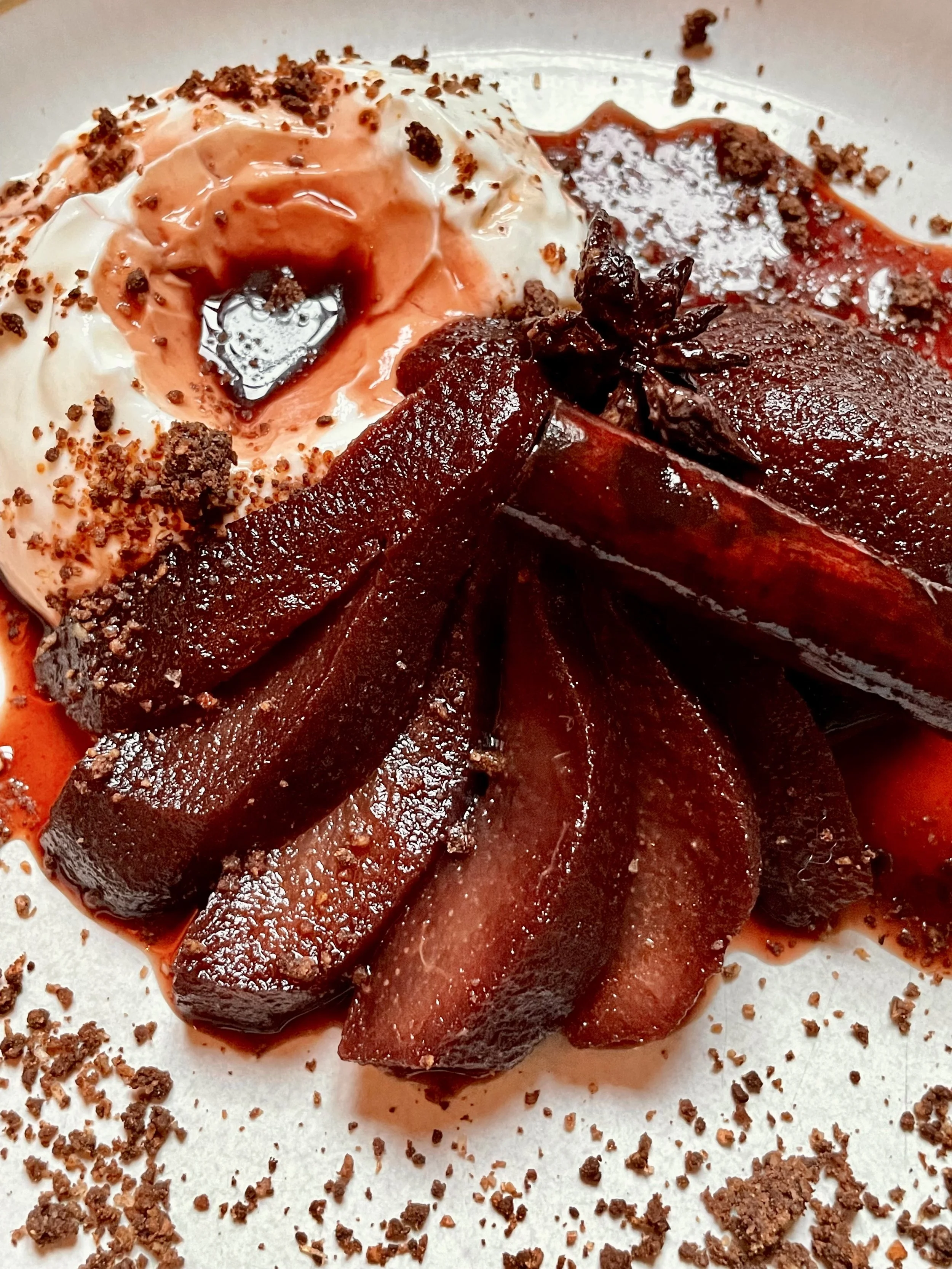
Unlike most of my family, I have always preferred fruit desserts to chocolate ones. When autumn arrives, this is undoubtedly one of my favourite ways to enjoy seasonal pears. Almost every week, I prepare a batch of poached pears, varying the poaching liquid according to my mood and whatever ingredients I have at hand.
This particular version appears regularly in our home. The combination of citrus and warm spices fills the kitchen with aromas that instantly remind me of Christmas, making it especially welcome as the days grow shorter and colder.
The pears are indulgent on their own, but I often serve them with yoghurt or kefir to balance their sweetness. For dinner parties, they pair beautifully with my Chestnut Mousse and a chestnut or chocolate crumble for added texture. Better still, they can be prepared several days in advance, leaving you free to enjoy your guests without any last-minute stress.
Serves 8
Ingredients
1 x 750 ml bottle of red wine (fruity is best)
6 tablespoons of sugar (I prefer to use dark muscovado sugar, but any will work)
My mix of aromatics is 2 star anise, 3 cloves, 1 long cinnamon stick or 2 small ones, peel of ½ orange or 1 clementine, but you can use your preferred combination
8 medium pears – 1 pear per person (I use the Portuguese Rocha variety, as its firm flesh holds its shape well during poaching, even when fully ripe)
Juice of 1 lemon
Optional garnish: walnuts, Greek yoghurt, cream or my other recipe Chestnut Mousse
Equipment
Large saucepan
Pealer or paring knife
Large bowl
Medium saucepan lid (one that will fit inside the large saucepan)
Slotted spoon
Storage or Serving container to keep the pears while they soak the syrup (ideal with a lid)
Method
1. Pour the wine, sugar and aromatics into a saucepan and bring to a boil over a high heat (setting 7 out of 9 on my induction hob). Lower the heat to medium (5 out of 9 on my hob) and gently simmer until the sugar has completely dissolved.
2. Meanwhile, peel and core the pears, transferring each one to the bowl of water and lemon juice while you prepare the remaining pears.
3. Once the sugar has dissolved, carefully lower the pears into the saucepan. They will tend to float, so place a lid directly on top of them to weigh them down and keep them submerged. You may need to add a little of the lemon water to ensure the pears are fully covered by the poaching liquid.
4. Gently simmer the pears for 20 to 30 minutes. The exact cooking time will depend on their ripeness, so begin testing them after 15 minutes by piercing them with a knife. The pears are ready when the knife passes through easily and the flesh is tender enough to eat with a fork or spoon. Using a slotted spoon, transfer the pears to a storage or serving container.
5. Increase the heat to high (setting 7 out of 9 on an induction or electric hob) and boil the poaching liquid until it reduces to a syrup. The desired thickness is largely a matter of personal preference. On my hob, during the cooler autumn months, this can take up to one hour. Keep a close eye on the syrup towards the end of the cooking time. As the liquid reduces, it can caramelise and burn surprisingly quickly.
6. Pour the syrup over the pears. Although the pears can be served immediately, our family prefers to leave them in the refrigerator for at least a day. This allows the deep burgundy colour and fragrant flavours to permeate the fruit fully.
Serve each pear on its own with a generous spoonful of the syrup or accompany it with a dollop of yoghurt and a scattering of walnuts for contrast and crunch. For special occasions, we almost always serve these pears alongside my Chestnut Mousse.
Tips:
While I suggest a particular combination of spices, feel free to adjust them to suit your own taste. When I make this recipe for my mother, for example, I always omit the star anise and cloves, as she is not particularly fond of them.
Many poached pear recipes leave the fruit whole, but I find it more practical to halve and core the pears before cooking. Not only do they poach more quickly, but your guests can enjoy them straight away without having to remove the seeds at the table.