Poached Quinces turn into Marmelada
Autumn is quince season. It is the time to cook marmelada and, of course, to enjoy eating it. Confusingly for British readers, Portuguese marmelada is what is commonly known in the UK as quince paste or quince cheese. Despite the similarity in name, it has nothing to do with orange marmalade.
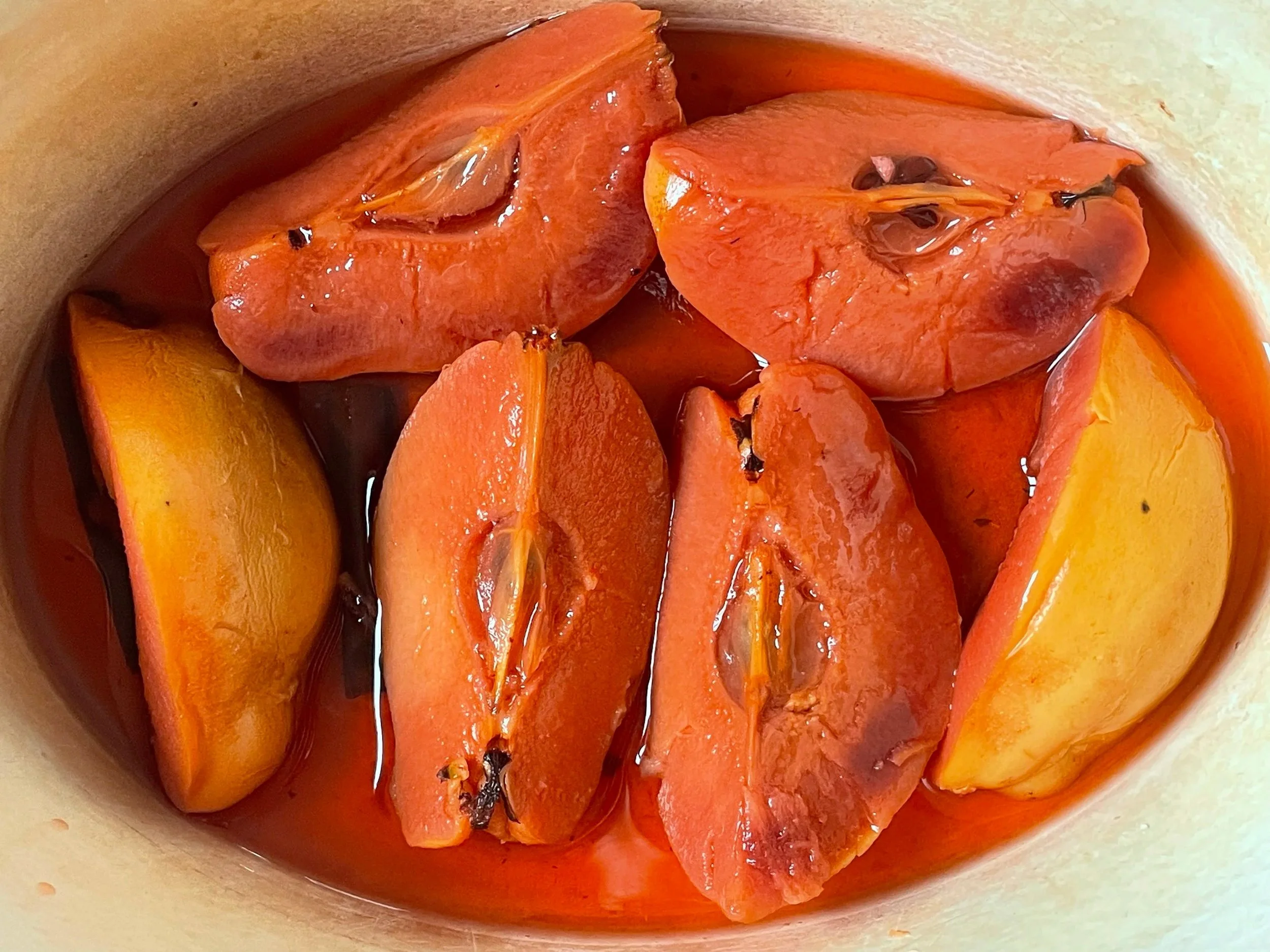
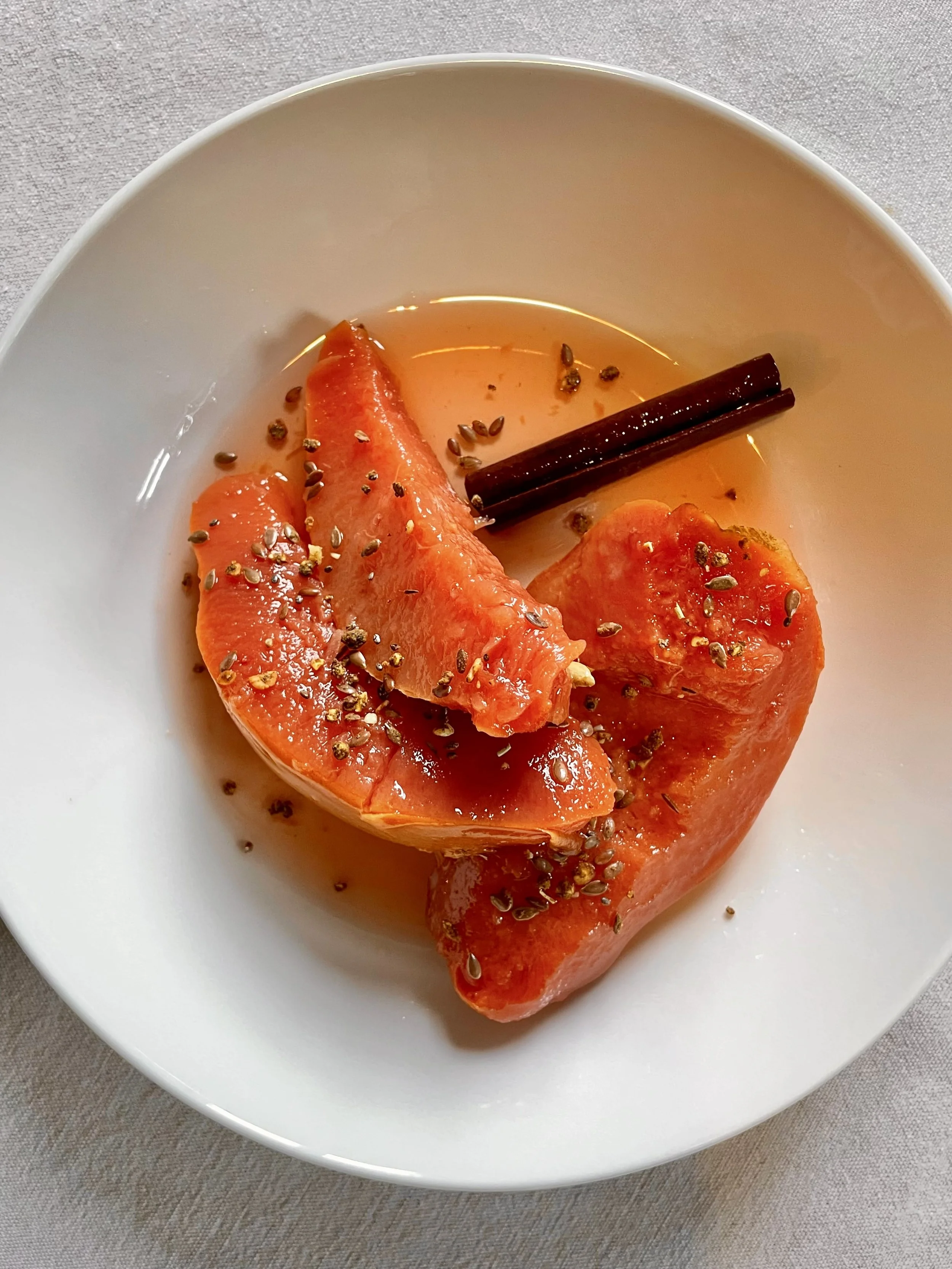
An essential step in making marmelada is poaching the quinces. I always poach more than I need for the paste, setting a few aside to serve at the end of a meal. Tender, fragrant and delicately pink coloured, poached quinces are a dessert in their own right at our table.
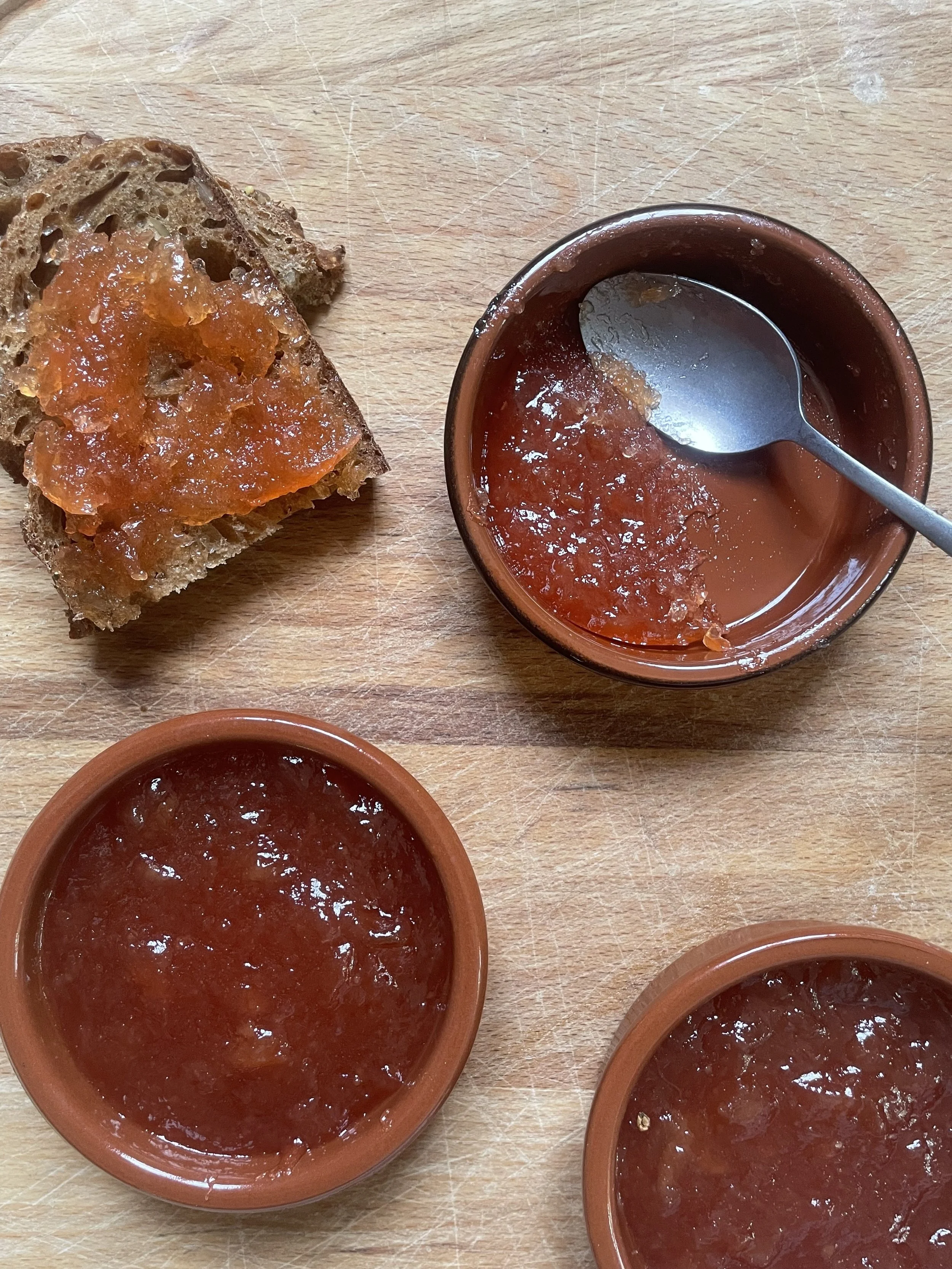
In Portugal, marmelada traditionally comes in two forms: a deep ruby version, similar in colour to the factory-made quince paste sold in many supermarkets, and a much lighter golden version. My preference is firmly for the ruby variety, although I have included tips for those who favour the lighter style. I most often enjoy marmelada simply spread on bread, although a slice of firm, mature cheese makes a particularly good companion.
This is really two recipes in one: poached quinces and marmelada. Neither is difficult to make, but over the years I have picked up a few tricks that help achieve the colour, texture and appearance shown in the photographs.
Serves 8
Ingredients
4 large quinces – 1 per person – well washed to remove the natural fuzzy coating (or 6 medium)
Juice of 1 lemon
2 tablespoons of white caster or granulated sugar
1 long cinnamon stick or 2 small ones
Optional: 2 bay leaves (omit if making marmelada)
Up to 1kg of sugar – only needed if making marmelada
Optional garnish: walnuts, Greek yoghurt or cream
Equipment
Large saucepan with a tightly fitting lid
Vegetable peeler or paring knife
Large bowl
Storage or serving container for the quinces while they soak in the syrup (ideally with a lid)
Slotted spoon
Large plate or jug
Kitchen scales
Fork or stick blender
Small plate, chilled in the freezer
Method
1. Cut the quinces in half, or into quarters if they are particularly large, transferring each piece to the bowl of water and lemon juice while you prepare the remaining fruit. Do not peel or core the quinces. The seeds help give the poaching liquid its beautiful pale pink colour, while the skin not only helps the fruit hold its shape but is also perfectly edible.
2. Sprinkle the sugar over the bottom of the saucepan. Arrange the quinces in the pan, skin side up. Add the aromatics and enough lemon water to cover most of the fruit, but do not fully submerge it. The skin should remain above the liquid. Cover with a tightly fitting lid.
3. Place the saucepan over a low heat (setting 2 out of 9 on an induction or electric hob) and simmer gently for approximately 2 hours. The quinces themselves will become tender much sooner, so most of the cooking time is devoted to developing the delicate pink colour of the syrup. The fruit is ready when a knife passes through easily and the flesh is tender enough to eat with a fork or spoon.
4. Transfer the quinces and poaching liquid to a storage or serving container. They can be enjoyed immediately, either on their own or with your chosen garnish.
For the Marmelada, follow the additional steps below.
5. Using a slotted spoon, transfer the quinces to a plate. Once cool enough to handle, peel them and remove the cores. Roughly mash the fruit using a fork. At this stage, weigh the quince flesh, as you will need this measurement in the next step.
6. Using the same saucepan (there is no need to wash it), add an equal weight of sugar to the quince flesh, together with poaching liquid equivalent to 20% of the weight of the fruit.
7. Stir to combine and place the saucepan over a high heat (setting 7 out of 9 on an induction or electric hob). Once the sugar has dissolved and has been boiling for a few minutes, stir in the mashed quince. Continue cooking, stirring frequently – see tips below, until the excess moisture has evaporated and the mixture has thickened into a paste.
8. Like other fruit preserves, marmelada reaches its setting point at around 106°C. That said, I rarely use a thermometer. Instead, I place a spoonful of the mixture onto a plate that has been chilled in the freezer. After 1 minute, I run a finger through the paste. If a clear line remains, the marmelada is ready. The longer it cooks, the darker the colour will become, developing from pink to deep ruby or burgundy, while the paste will continue to thicken.
9. Spoon the marmelada into storage containers or the traditional terracotta dishes. It is ready to eat immediately, although in Portugal it is traditionally dried further by leaving it in the sun for a few days.
Tips:
Take care during Step 7 and consider wearing kitchen gloves or using a long-handled spoon. As the mixture thickens, it can bubble vigorously and splatter hot paste onto your hands and hob.
I prefer my marmelada to develop a deep ruby colour, but many people favour a lighter, light golden-coloured marmelada version that more closely resembles the natural colour of the quinces. There are several key rules to achieve this lighter result. The most important precaution is to avoid contact between the quinces and metal utensils, such as knives, forks or metal spoons. For this reason, the quinces should be cooked whole in Step 2. In Step 5, use your hands or plastic utensils to peel and core the fruit. As the quinces will still be very hot, you may find it easier to leave them to cool in their syrup overnight before handling them. Finally, in Step 7, use a wooden spoon or spatula and cook the marmelada slowly over a low heat (setting 2 out of 9 on an induction or electric hob). This gentler approach helps preserve the lighter colour. Note that even the slightest deviation from these recommendations will result a darker colour paste.