Pudim de Gelatina (Our Fake Panna Cotta)
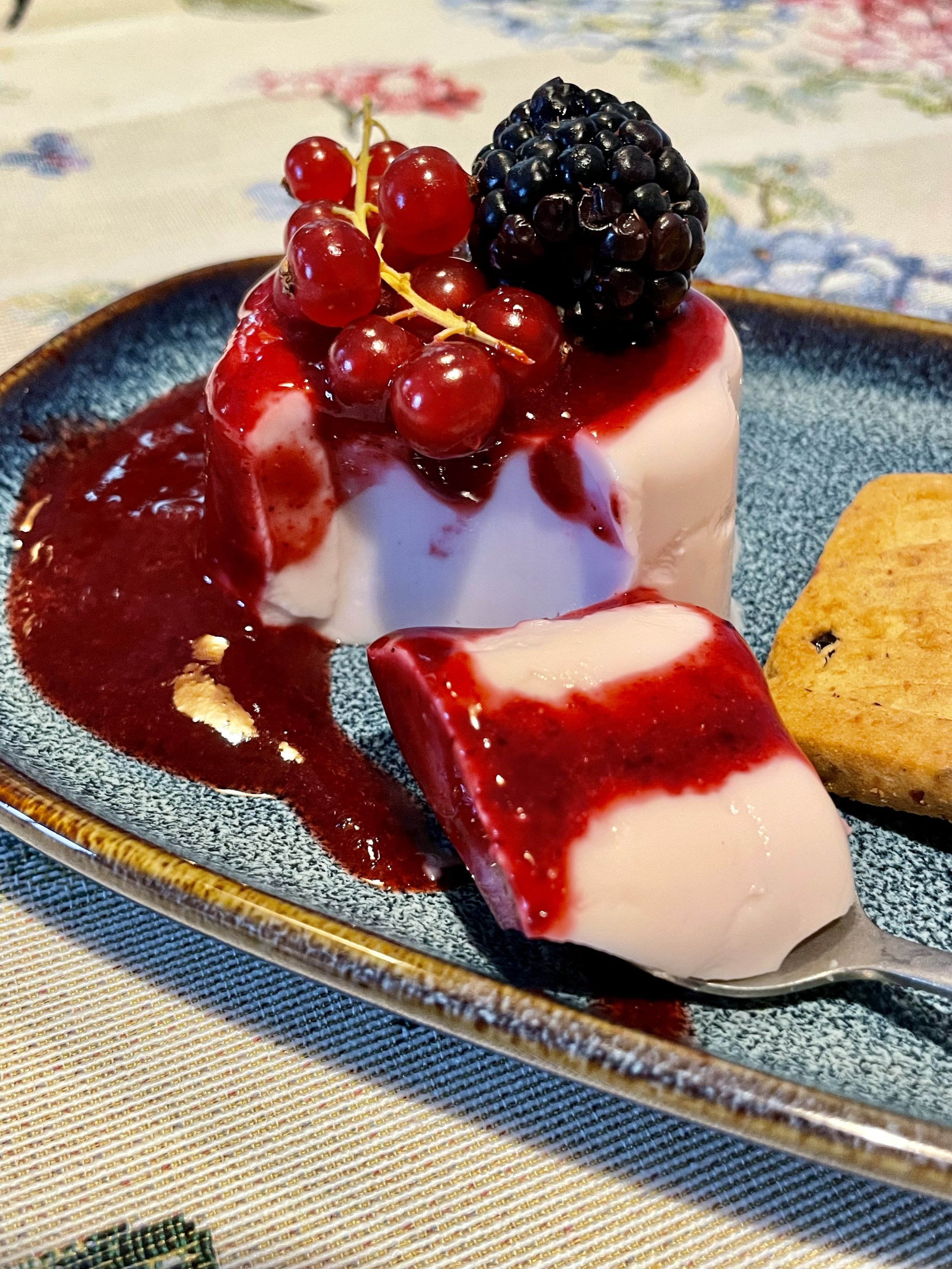
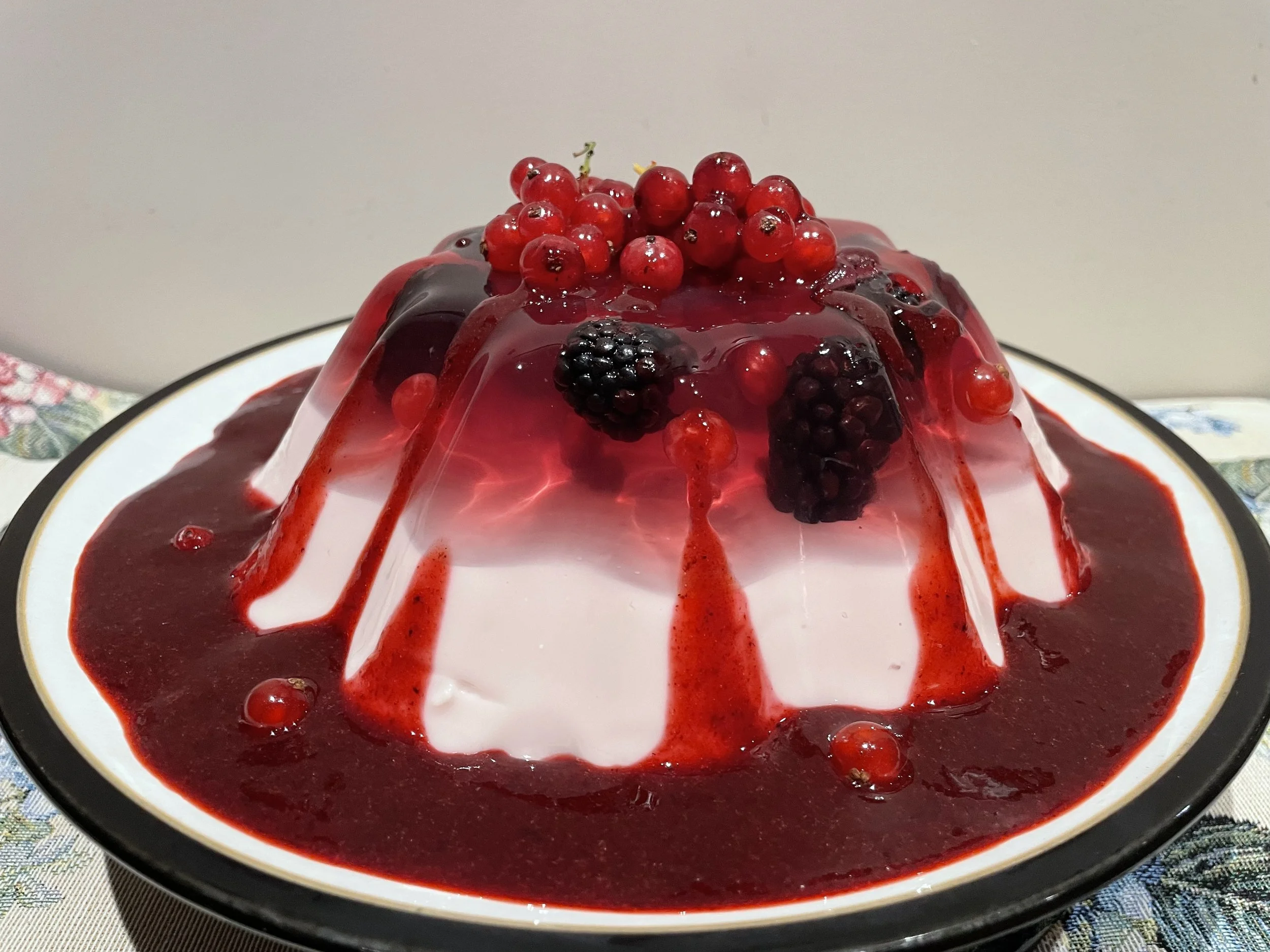
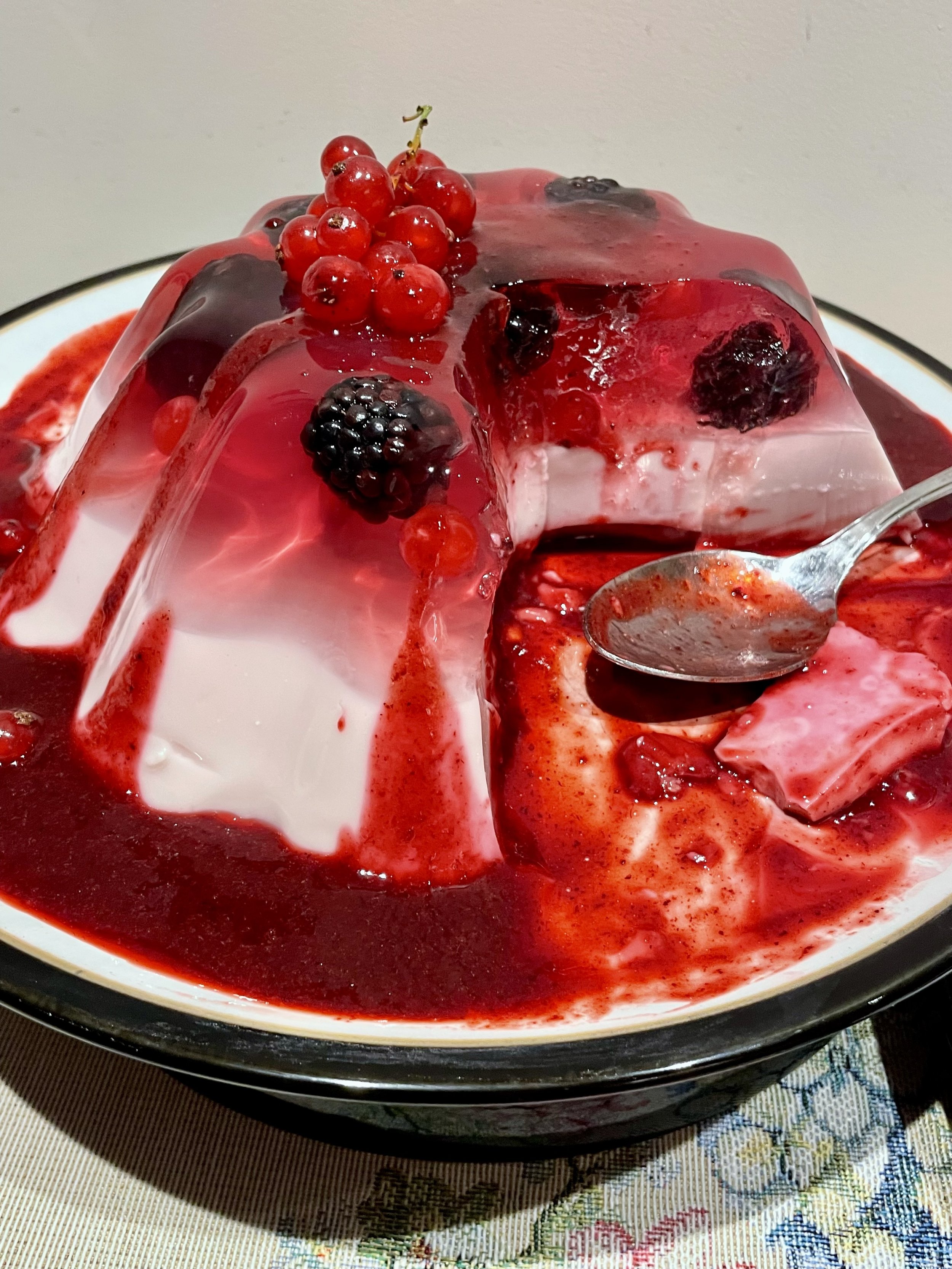
This recipe was originally created for those in the family who were less enthusiastic about cream, a staple ingredient of traditional panna cotta, and has since become a firm staple at our table as everyone loves jelly. Made with just a few ingredients commonly found in Portuguese households and requiring no cooking whatsoever, it never fails to attract admiring comments and requests for second helpings.
Light, fruity and delicately wobbly, it is less rich than its Italian counterpart, making it a particularly refreshing way to end a meal on a warm summer's day, but we eat it all year long. I sometimes serve it in individual portions, but for larger gatherings I prefer to make one large pudding to share. The theatrical wobble of the family-size serving has a show-stopping quality when brought to the table.
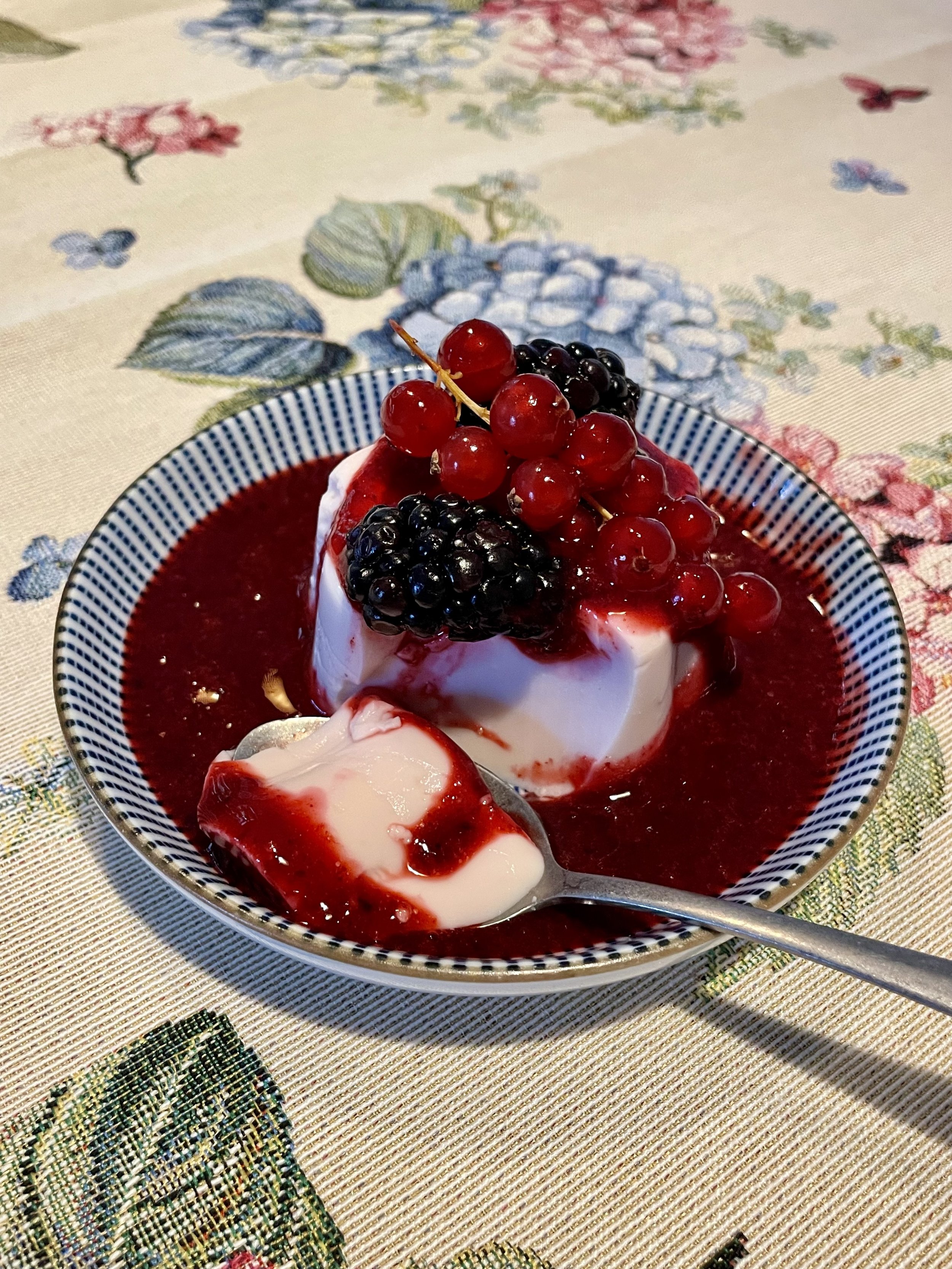
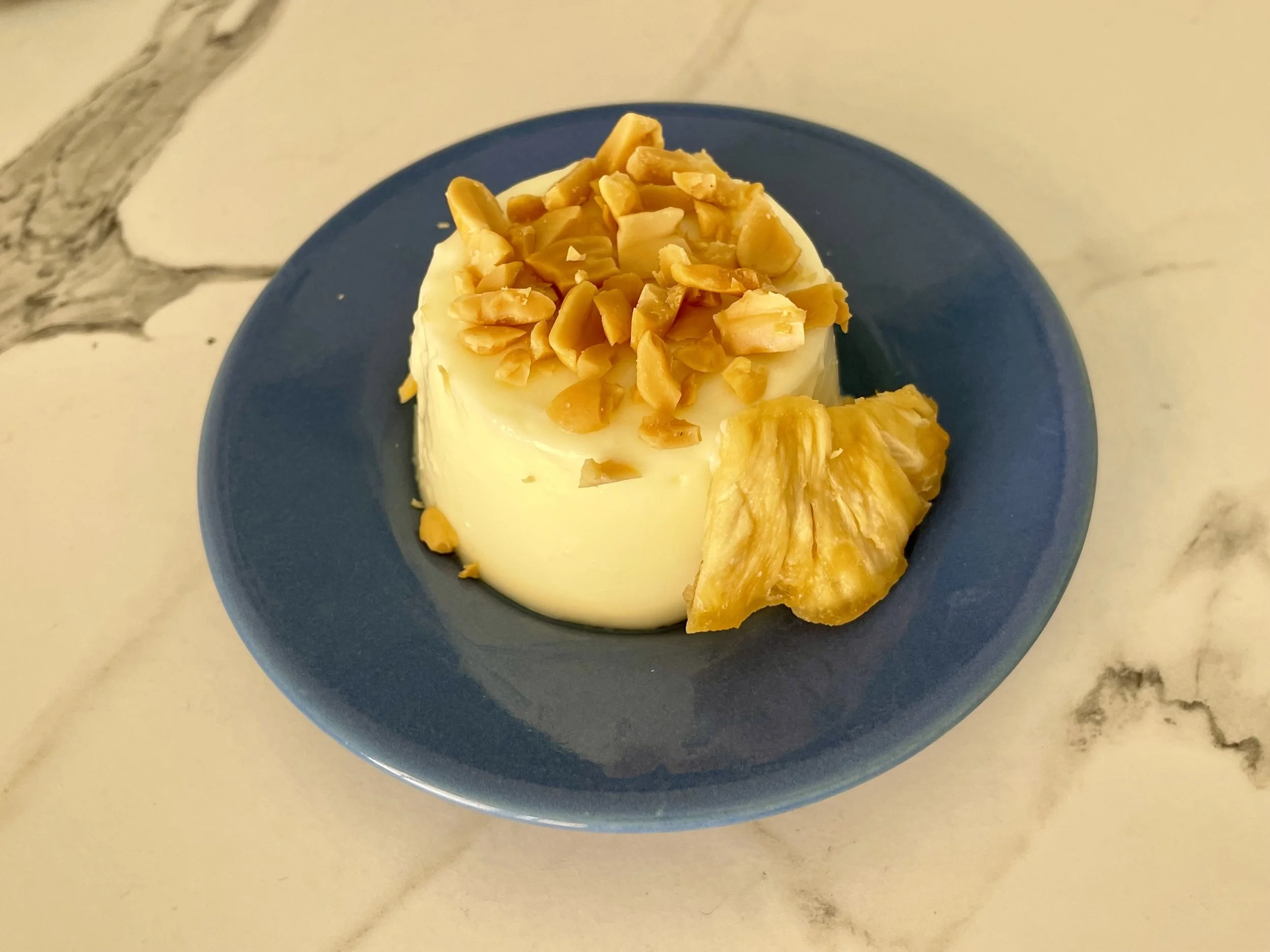
Although delicious on its own, I often serve it with fresh fruit or a fruit coulis, together with a scattering of nuts or crumble for added crunch. The contrast of flavours and textures elevates an otherwise simple jelly into something rather special. If your family likes jelly, give it a go.
Ingredients
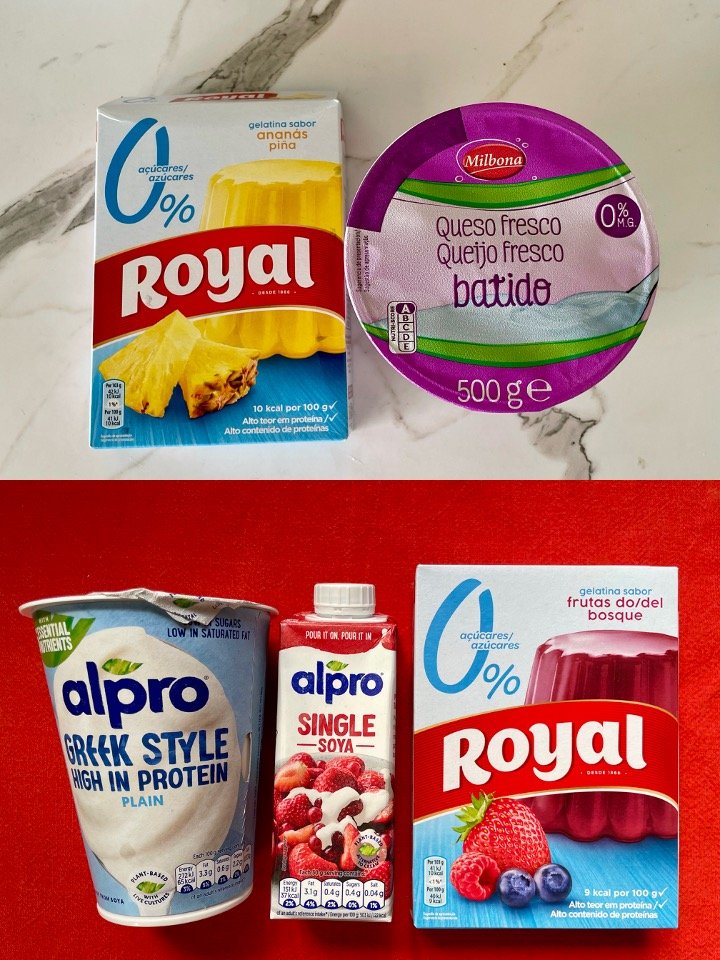
1 packet powdered fruit-flavoured jelly, preferably sugar-free or reduced sugar, suitable for making 1 litre of jelly (pineapple, strawberry or red berries flavours work particularly well)
500 gr of Portuguese “queijo fresco” batido or 400 ml Alpro Protein/Greek Style yoghurt and 100 ml vegan or soya cream
700-750 ml boiling water for a wobbly panna cotta set (use only 500 ml if you prefer a firmer set pudding)
Optional: fruit coulis (shop bought or home-made -see tips below), biscuits or nut to serve
Equipment
Medium mixing bowl
Whisk
Large or individual pudding mould
Serving plate with rim, if using a coulis or sauce
Optional: bowl large enough for the pudding mould to fit inside
Serves 8
Method
1. Dissolve the jelly thoroughly in the boiling water, whisking until no crystals remain. Allow the mixture to cool slightly, approximately 15 minutes.
2. Whisk in the soft cheese, or the yoghurt and cream mixture, until smooth and fully combined. Pour the mixture into the pudding mould. Transfer to the refrigerator and chill for at least 4 hours, or until fully set.
3. To unmould the pudding, briefly dip the mould into a bowl of just boiled water. As animal jelly begins to melt at 30°-35°C, only leave it in the water for a few seconds. Turn the pudding out onto a serving plate and serve with your chosen garnish.
Tips:
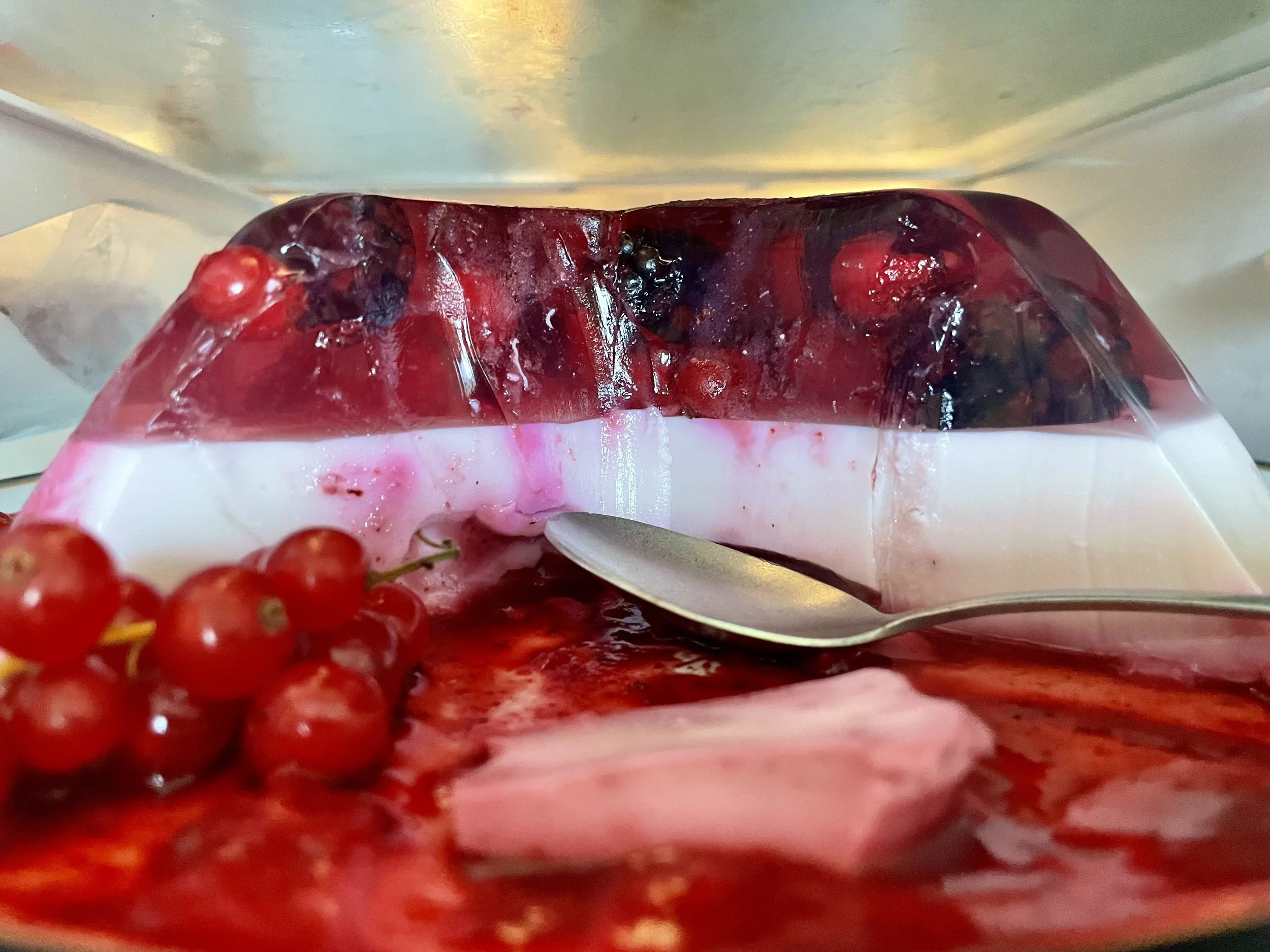
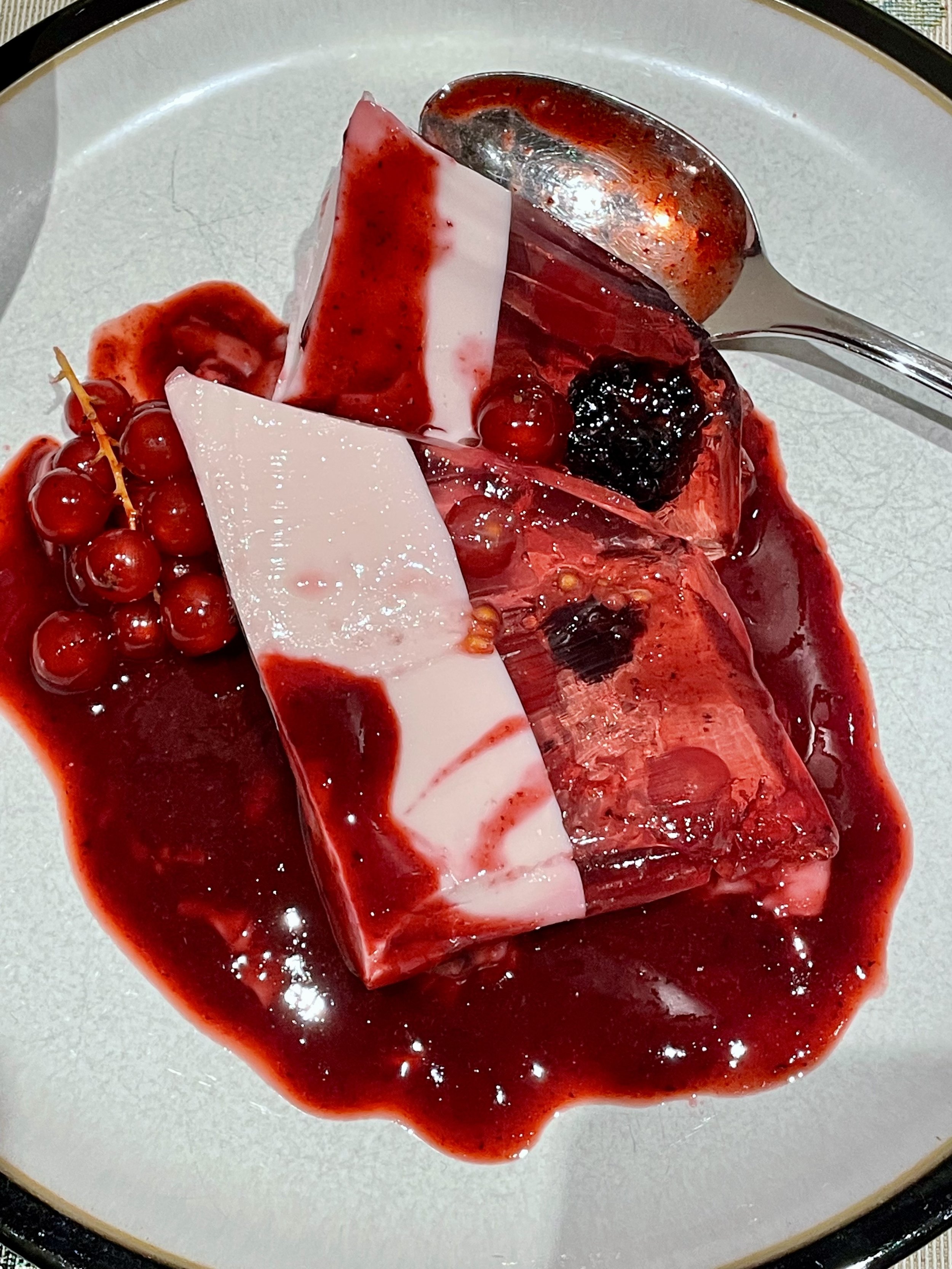
Some of the photographs show a two-layer version: half of the dessert is made with regular jelly and contains pieces of fruit, while the other half is made with this creamy mixture. The contrast creates a particularly striking dessert that looks far more impressive than the effort required. If you would like to recreate it, prepare and set the transparent jelly first, adding 25% more water than the instructions for that softer wobblier set, before carefully pouring over the pudding mixture.
To make the fruit coulis, place 150g mixed berries (frozen berries work perfectly well) and 2 tablespoons of maple syrup or honey in a blender jug. Blend until smooth. If time allows, pass the coulis through a fine sieve to remove the seeds and achieve a smoother texture.
Have You Tried This Recipe? How did it go?
I'd love to know how it turned out. Your comments help me improve the recipes, timings and instructions while this website is still in construction. Click to share your experience