Colourful Feijoada (Bean Stew)
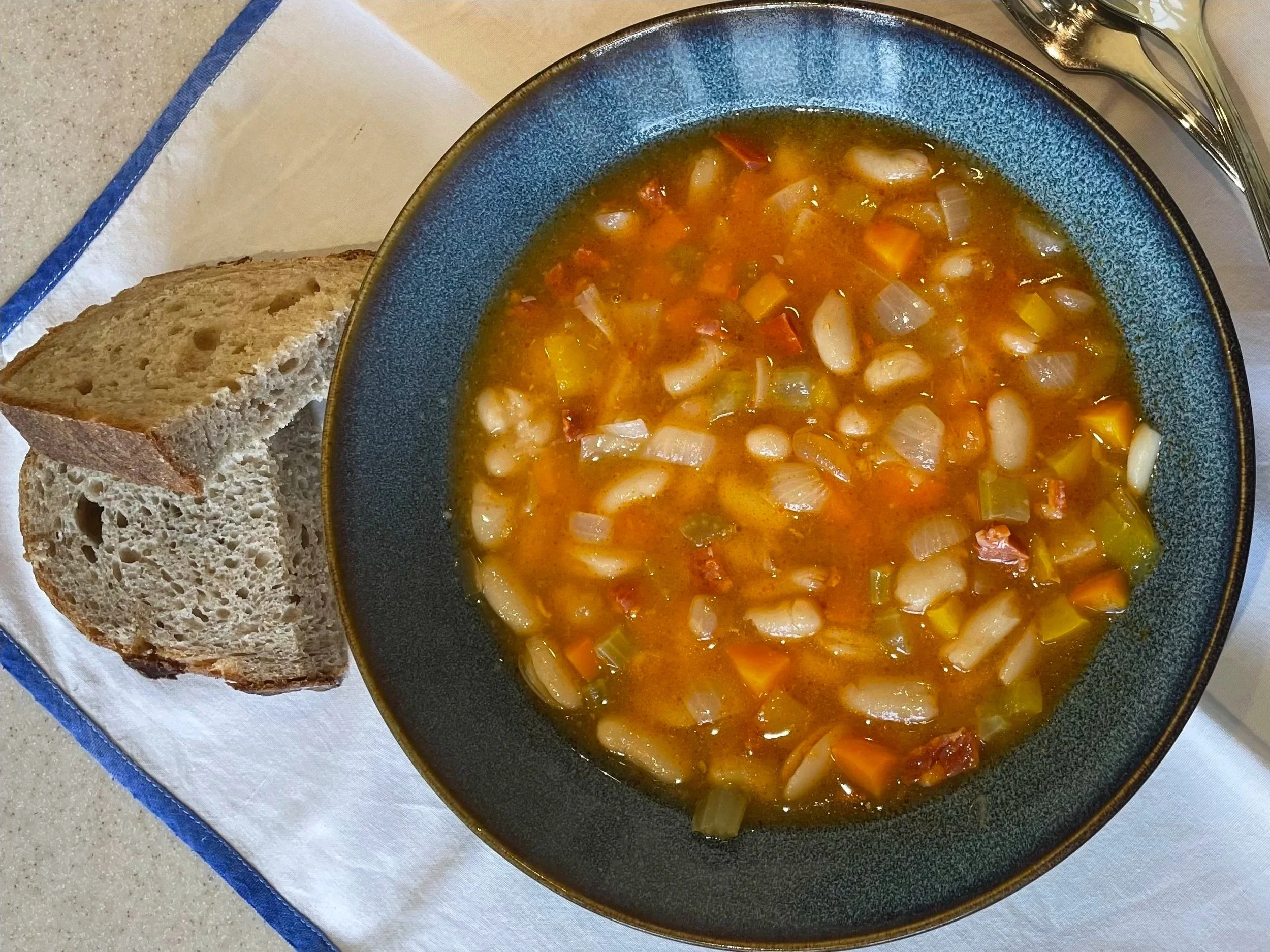
In our home, we have several versions of feijoada - this Portuguese traditional bean and chorizo dish - that we alternate throughout the year. This is our summer rendition, where the coloured vegetables take centre stage.
The fact that we tend to cook it in the summer is more of a tradition than by necessity as the ingredients are now available all year long. The bright reds and oranges of the peppers and carrots bring colour to the table, while the chorizo still provides all the smoky flavour and smell that makes feijoada so comforting.
As always with feijoada, feel free to adapt it to whatever vegetables or meats you enjoy most. For inspiration, have a look at the other feijoada variations in this collection.
We usually enjoy it with plain rice, although a thick slice of bread is perfect for soaking up the sauce. Truth be told, it is delicious enough to eat on its own!
Serves: 4 (can easily be doubled to serve 8)
Ingredients
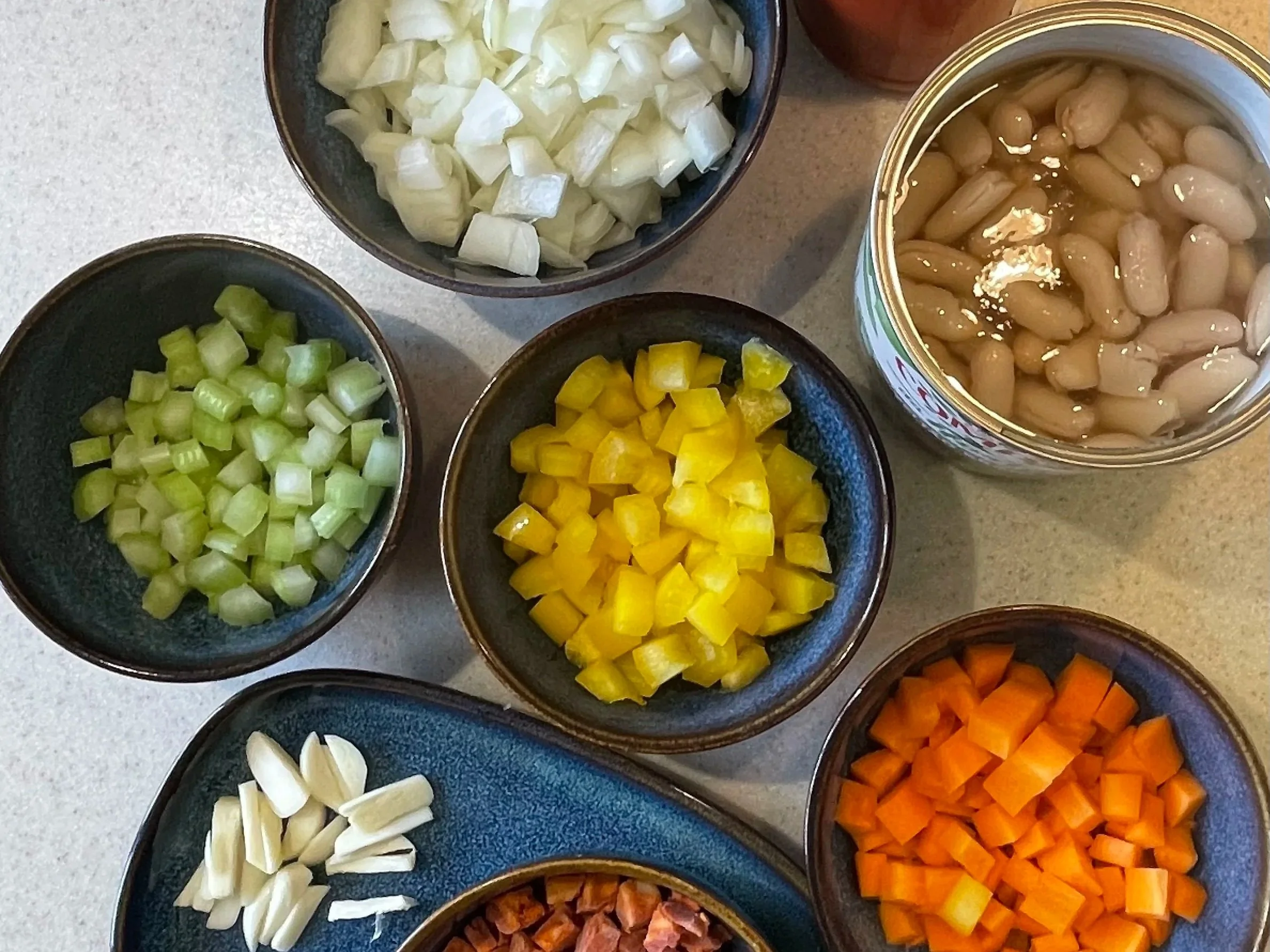
All ingredients, except the garlic, should be chopped or cut into cubes (diced) of
approximately the same size as the beans (as shown in the photo).This recipe is very forgiving—even though I indicate quantities below, these are just for guidance
2–3 tablespoons extra virgin olive oil (use only 2 if the chorizo has a lot of fat)
1 medium onion (100–150 g)
1 long celery stalk or 2 medium ones (50–60 g)
½ chorizo, cut into cubes, or 75–100 g diced chorizo (Waitrose Cooks’ Ingredients Diced Chorizo is a good option if you cannot find a whole chorizo). If you cannot find chorizo, alternatives include pancetta or smoked bacon.
2 garlic cloves, thinly sliced
1 large can (850–900 g) cooked white beans with their liquid (cannellini beans are a good option in the UK). The brand I use contains very little salt and no additives. With other brands, you might want to replace the liquid with water to avoid too much salt or too many preservatives
1 medium carrot, diced (75–100 g)
The same volume as the carrot of red or yellow pepper (usually about ½ a pepper), diced (75–100 g)
3 tablespoons of tomato passata
Salt to taste—note that the chorizo and beans are already salty, so you may not need any extra salt
Black pepper to taste
Equipment
Large saucepan with a lid / casserole pan (ideally a tight-fitting one, like a Dutch oven, or you will lose moisture during cooking and your stew can burn).
Wooden spoon or large spoon.
Method
1. Bring the pan to a medium heat (setting 5 out of 9 in an induction or electric hob). Add the olive oil, onion and celery to the pan and sauté the onion for about 5 minutes.
2. Add the chorizo and garlic to the pan and cook for another 3 to 5 minutes. After a few minutes, when you can smell both the garlic and chorizo, and the oil and onion have turned a bright orange colour from the chorizo, it is time to add the beans with their liquid.
3. Mix in the carrots, peppers, and passata. If the bean can contains very little liquid, add a glass of water to cover the vegetables, but remember that all vegetables will release water during cooking, so do not add too much. Taste the stew, and if needed, season with salt and pepper to your liking.
4. Bring the mixture to the boil in the uncovered pan. As soon as the mixture is boiling, reduce the heat to low (2 out of 9) and cover the pan. Let it cook / simmer for a minimum of 15 minutes, up to 2 hours to infuse the flavours (a bit longer will not matter if the lid has a tight fit that prevents the steam from escaping).
5. Check again for seasoning and fine-tune to your preferences. Some people enjoy the stew more liquid, like a soup; others, like us, prefer it to be more like a thick gravy. You might need to add water to adjust the stew to your liking or let it boil uncovered to reduce the liquid.
6. The stew is now ready to serve with white rice or crusty bread. In our household, we always let the stew cool down in the pot and reheat it the following day. We think it tastes even better then.
Tips
Make double the quantity and keep the leftovers for another meal.
The stew will last in the fridge for about 5 days and can be frozen. If frozen, just leave it outside the fridge/freezer for a few hours before your desired mealtime. To reheat, transfer the stew to a large saucepan over low to medium heat (3 or 4 out of 9) until it starts boiling.
Have You Tried This Recipe? How did it go?
I'd love to know how it turned out. Your comments help me improve the recipes, timings and instructions while this website is still in construction. Click to share your experience