
Colourful Roast Pork with Crackling (Stuffed with Prunes and Apricots)
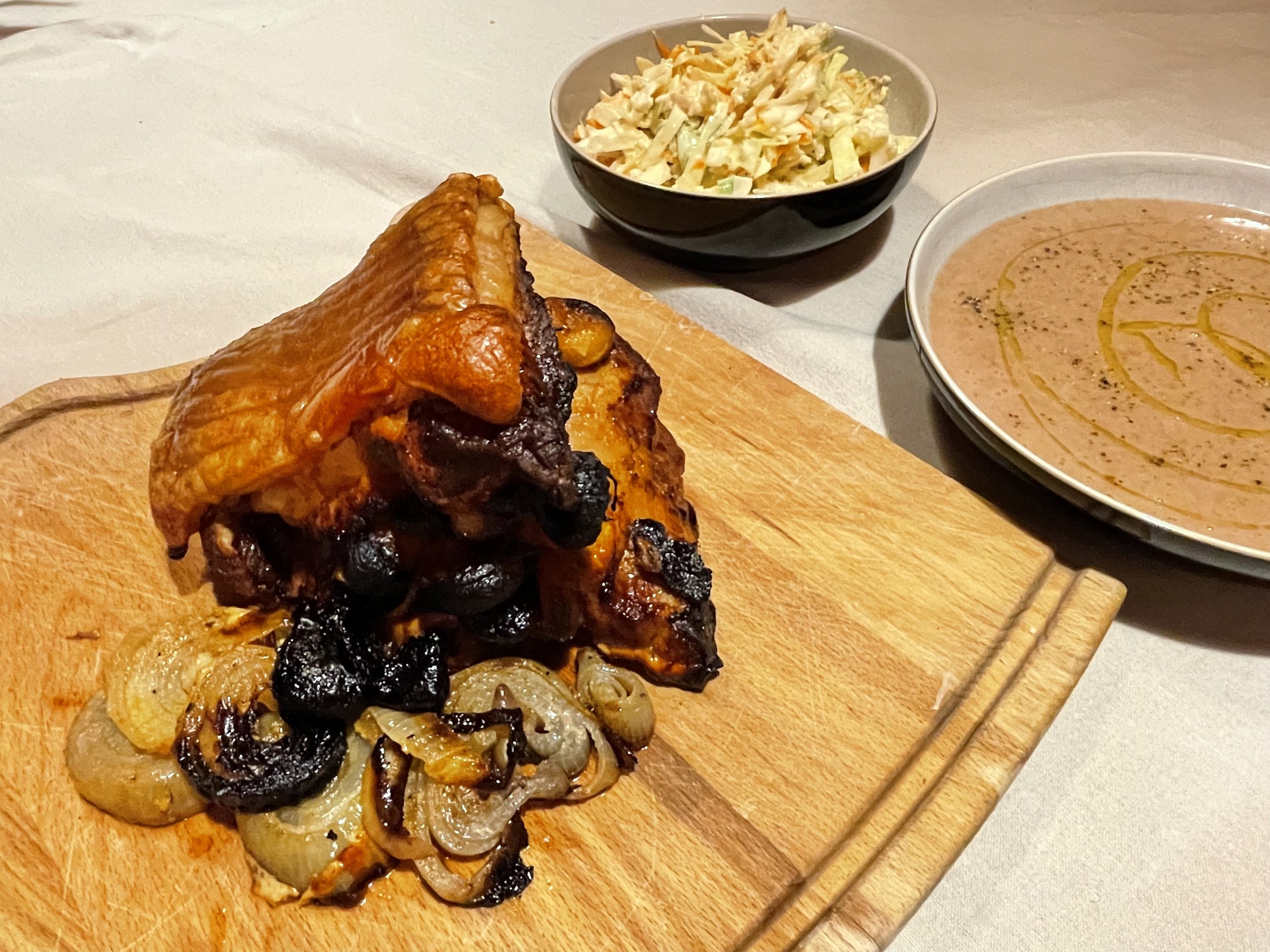
Pork is undoubtedly our family's favourite meat, and it appears at almost every celebration and special gathering. Christmas lunch, birthday dinners, Sunday family meals, there is usually some form of pork on the table. Over the years, we have cooked it in many ways, and several of those recipes will appear throughout this collection. This roast pork is one of the dishes I most strongly associate with family celebrations. In Portugal, it is traditionally prepared with pork loin alone, without the crackling that is so beloved in the UK. Having lived here for many years, I have happily adapted the recipe to local tastes and now leave the crackling on. In my opinion, the combination of juicy meat and crisp crackling is difficult to resist.
The secret to success lies almost entirely in the oven temperature. A long, gentle roast keeps the pork tender and succulent, while a final blast of heat creates beautifully crisp crackling. Pay particular attention to those steps and you will be rewarded with a roast that looks impressive but requires surprisingly little effort. If you can afford, invest in a meat thermometer, which will help you making sure you cook the pork to your preference.
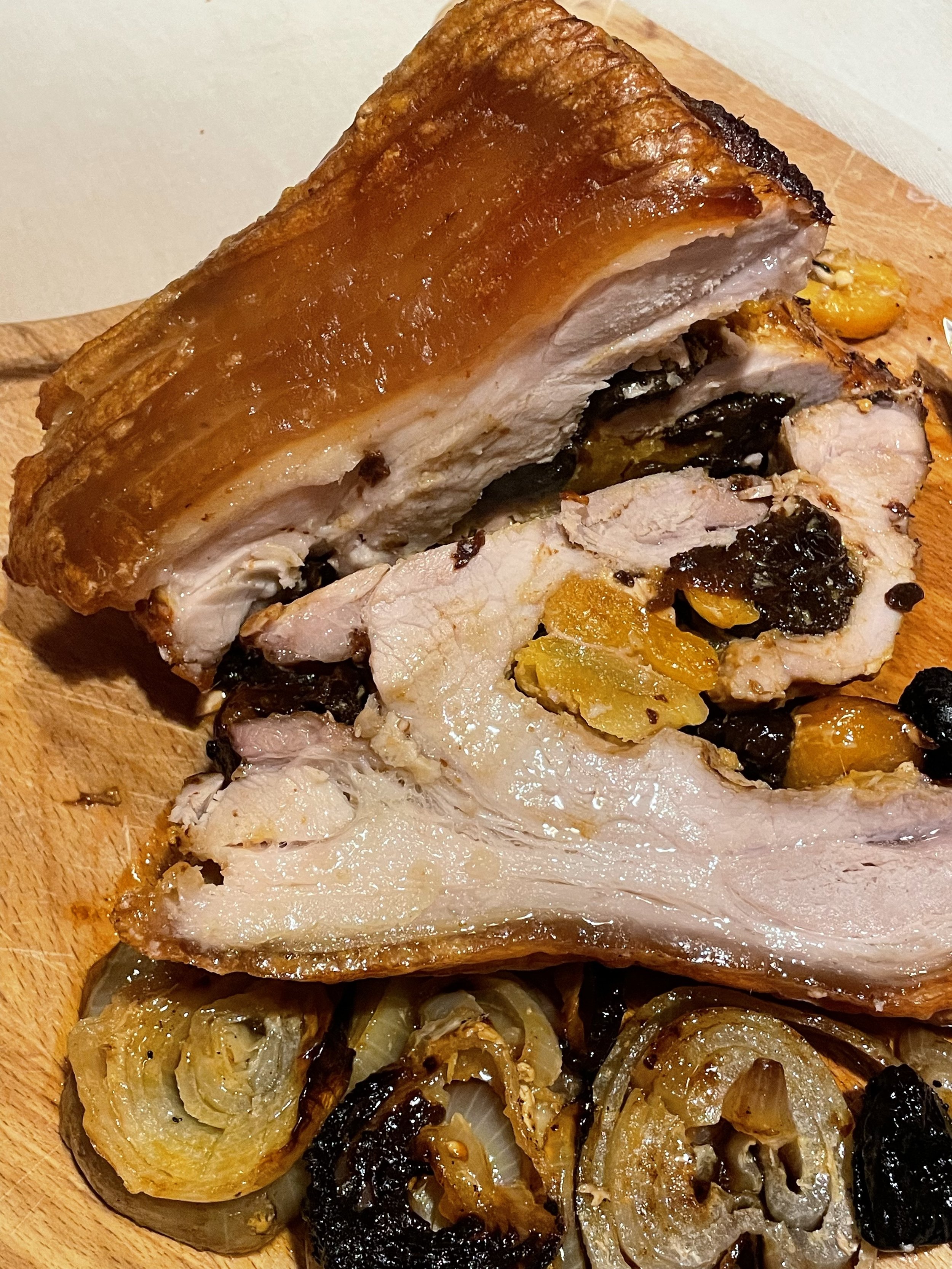
In the photographs, the pork loin has been butterflied and stuffed with prunes and apricots. This is entirely optional, but it adds a touch of sweetness that works wonderfully with the rich pork and smoky paprika marinade. Whether stuffed or plain, this roast has a habit of disappearing quickly whenever it appears on our table.
Recommended cooking temperatures for pork vary from country to country, so if in doubt, check the food safety guidance applicable where you live.
Serves 4
Ingredients
For the Marinade
2-3 tablespoons smoked paprika
2-3 tablespoons garlic granules
3-4 tablespoons extra virgin olive oil
1 bay leaf, finely crumbled
A generous pinch of sea salt
Freshly ground black pepper, to taste
Optional: A small glass of white wine
1.5kg pork loin with the crackling left on. If stuffing it, ask your butcher to butterfly the pork
1 medium onion, thickly sliced to create a bed for the pork (fennel also works well)
Optional: about 200 gr of prunes and apricots
Equipment
Container or dish with a lid, just large enough to hold the pork snugly in the marinade
Kitchen towels
Cling film
Large roasting tray
Kitchen foil
Meat thermometer, recommended
Method
The pork is at its best when marinated for 24 hours, so I always start this recipe the day before.
1. In the marinade container, mix the smoked paprika, garlic granules, olive oil, bay leaf, salt and pepper to form a paste. If using, add the white wine and stir well.
2. Rub the marinade generously over the pork, taking care to avoid the crackling. If stuffing the pork, unroll the butterfly loin first, season in pork interior well, fill with the prunes and apricots before tying or rolling it back into a round shape with the crackling on top. Pat the crackling top with the kitchen towels to remove any moisture or marinade that might have gone into the crackling.
3. Place the pork in the container, cover with cling film or lid and refrigerate for 24 hours.
4. On the day of serving, remove the pork from the refrigerator 30 minutes to 1 hour before cooking. Preheat the oven to 130°C fan (or 150°C conventional).
5. Place the onion on the roasting tray, and the pork on top of the onion. Transfer the tray to the oven and roast gently for approximately 2 hours. The exact cooking time will depend on the thickness of the joint. Keep an eye on the pork to ensure it remains juicy and does not dry out. I aim for an internal temperature of 50°C as it will continue to cook during the next step and resting.
6. Increase the oven temperature to 230°C fan (or 250°C conventional) and continue cooking for a further 20-30 minutes, or until the crackling is crisp and golden. At this stage, the internal temperature should have risen to 55°C-58°C.
7. Transfer the pork to a serving board and leave it to rest for at least 20 minutes, loosely covered with foil. The temperature will continue to rise while resting, typically finishing well above 60°C. For more well-done pork, continue roasting in Step 5 until the internal temperature is higher, according to your preference.
8. Carve and serve. In the photos, the pork was served with cabbage, carrot and apples slaw and pinto bean puree.
Tips
The crackling benefits from being kept completely free of marinade. Any moisture on the skin will make it harder to achieve a crisp finish.
We often serve this roast with crispy roast potatoes, often cooked in the same roasting tray alongside the pork. Roasted pumpkin, carrots, chestnuts and cooking apples are also frequent companions, particularly during autumn and winter. Their sweetness complements the smoky paprika marinade beautifully.
Have You Tried This Recipe? How did it go?
I'd love to know how it turned out. Your comments help me improve the recipes, timings and instructions while this website is still in construction. Click to share your experience