My Family’s Feijoada
(Bean Stew)
Every region in Portugal—and, in fact, every family—has its own version of this traditional bean and chorizo dish. In our home, we have two main feijoada versions that we alternate between, mostly depending on the season. We tend to cook this version in the summer, when the lighter version with a smaller quantity of meat seems to make more sense, and the pop of the carrots and red peppers stands out.
It is amazing how, with a small portion of meat and some humble vegetables, you can make something so tasty, filling, and varied. We love the smell of the chorizo that fills the kitchen during cooking.
This dish has only four main mandatory ingredients that all Portuguese households have in their food cupboard: beans (tinned is fine), onions, garlic, and chorizo. The rest is up to you. Some feijoadas have more cured meats, some less; some add other pork cuts, some add cabbage, and others add carrots or peppers—or both. Even the type of beans changes depending on the household. You can add other favourite meats or vegetables.
The quantities provided are for four main-course servings, but I always cook a much larger portion and freeze the leftovers.
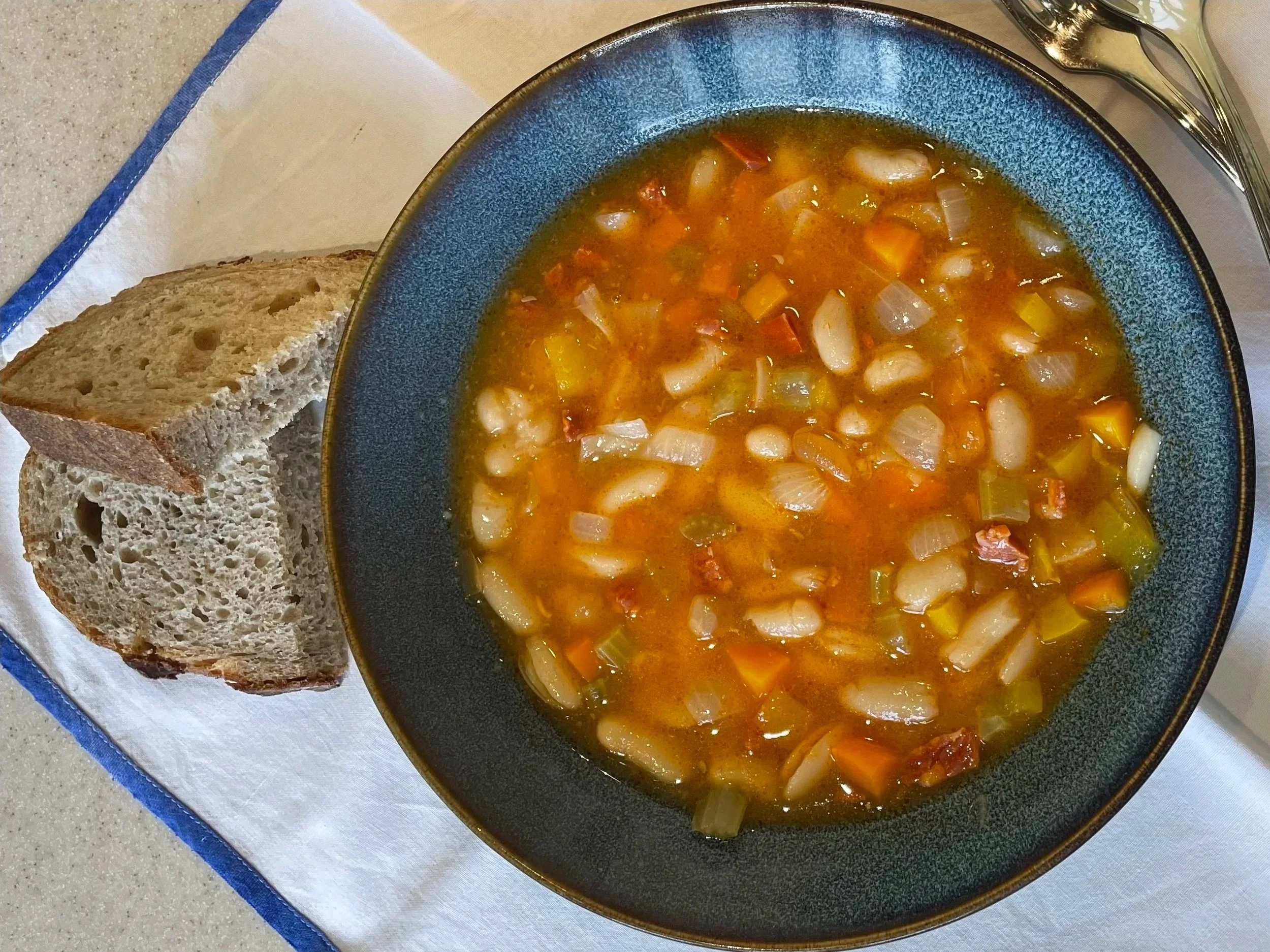
We usually have it with plain rice, but feel free to vary it: have it with a thick slice of bread or even just on its own—it is delicious!
Serves: 4 (can easily be doubled to serve 8)
Ingredients
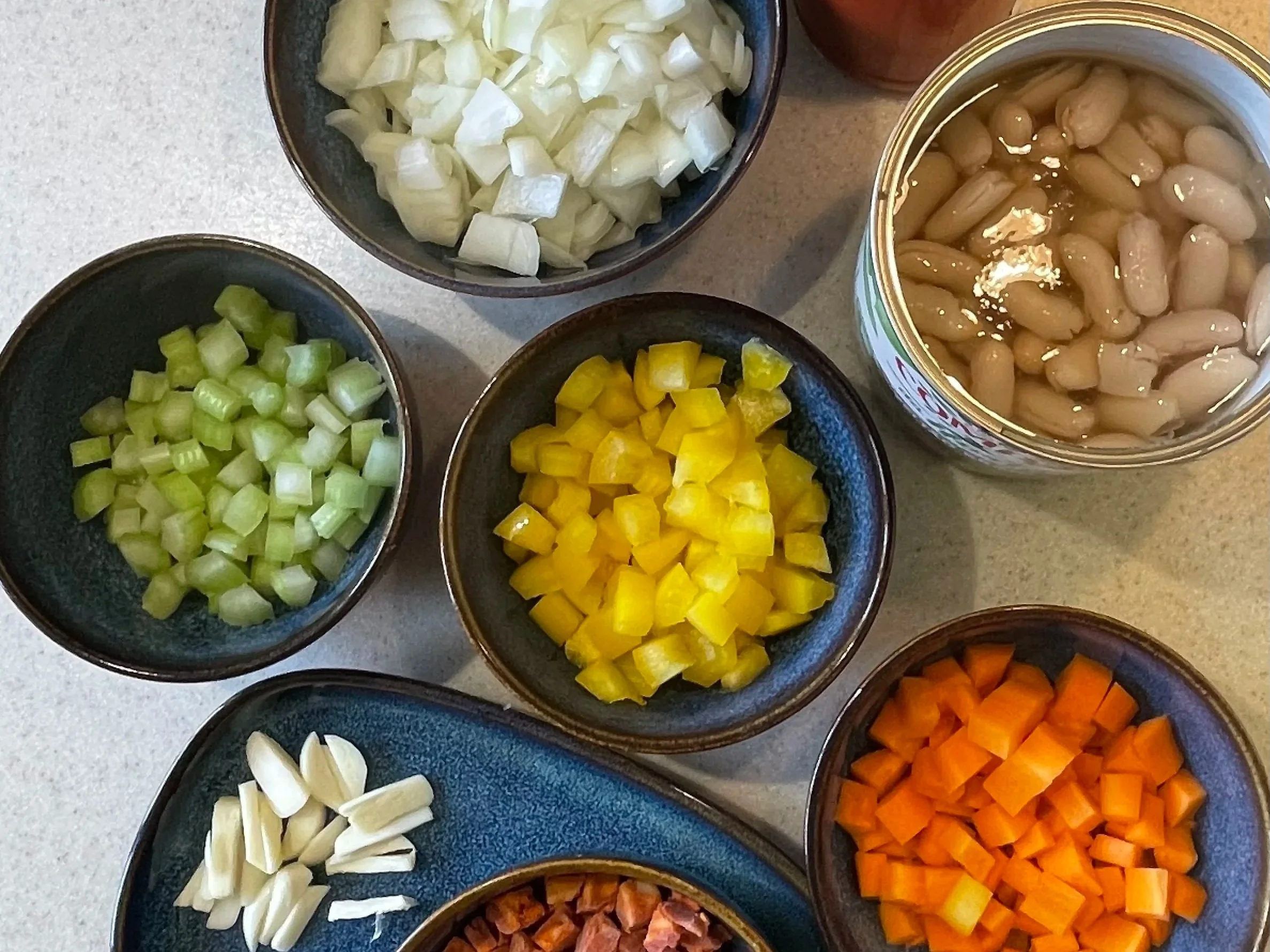
All ingredients, except the garlic, should be chopped or cut into cubes (diced) of
approximately the same size as the beans (as shown in the photo).This recipe is very forgiving—even though I indicate quantities below, these are just for guidance.
2–3 tbsp extra virgin olive oil (use only 2 if the chorizo has a lot of fat)
1 medium onion (100–150 g)
1 long celery stalk or 2 medium ones (50–60 g)
½ chorizo, cut into cubes, or 75–100 g diced chorizo (Waitrose Cooks’ Ingredients Diced Chorizo is a good option if you cannot find a whole chorizo). If you cannot find chorizo, alternatives include pancetta or smoked bacon.
2 garlic cloves, thinly sliced
1 large can (850–900 g) cooked white beans with their liquid (cannellini beans are a good option in the UK). The brand I use contains very little salt and no additives when cooking the beans. With other brands, you might want to replace the liquid with water to avoid too much salt or too many preservatives.
1 medium carrot, diced (75–100 g)
The same volume as the carrot of red or yellow pepper (usually about ½ a pepper), diced (75–100 g)
3 tbsp of tomato passata
Salt to taste—note that the chorizo and beans are already salty, so you may not need any extra salt
Black pepper to taste
Equipment
Large saucepan with a lid / casserole pan (ideally a tight-fitting one, like a Dutch oven, or you will lose moisture during cooking and your stew can burn).
Wooden spoon or large spoon.
Method
1. Bring the pan to a medium heat (or 5 out of 9).
2. Add the olive oil, onion and celery to the pan and sauté the onion for about 5 minutes.
3. Add the chorizo and garlic to the pan and cook for another 3 to 5 minutes.
4. After a few minutes, when you can smell both the garlic and chorizo, and the oil and onion have turned a bright orange colour from the chorizo, it is time to add the beans with their liquid.
5. Mix in the carrots, peppers, and passata.
6. If the bean can has very little liquid, add a glass of water to cover the vegetables, but remember that all vegetables will release water during cooking, so do not add too much.
7. Taste the stew, and if needed, season with salt and pepper to your liking.
8. Bring the mixture to the boil in the uncovered pan.
9. As soon as the mixture is boiling, reduce the heat to low (2 out of 9) and cover the pan.
10. Let it cook / simmer for about 2 hours to infuse the flavours (a bit longer will not matter if the lid has a tight fit that prevents the steam from escaping).
11. Check again for seasoning and fine-tune to your preferences.
12. Some people enjoy the stew more liquid, like a soup; others, like us, prefer it to be more like a thick gravy. You might need to add water to adjust the stew to your liking or let it boil uncovered to reduce the liquid.
13. The stew is now ready to serve with white rice or crusty bread.
14. In our household, we always let the stew cool down in the pot and reheat it the following day. We think it tastes even better then.
Tips
Make double the quantity and keep the leftovers for another meal.
The stew will last in the fridge for about 5 days and can be frozen. If frozen, just leave it outside the fridge/freezer for a few hours before your desired mealtime. To reheat, transfer the stew to a large saucepan over low to medium heat (3 or 4 out of 9) until it starts boiling.